EN
EN
 AR
AR BG
BG HR
HR CS
CS DA
DA NL
NL FI
FI FR
FR DE
DE EL
EL IT
IT JA
JA KO
KO NO
NO PL
PL PT
PT RO
RO RU
RU ES
ES SV
SV CA
CA TL
TL IW
IW ID
ID LV
LV LT
LT SR
SR SK
SK SL
SL VI
VI SQ
SQ HU
HU MT
MT TH
TH TR
TR FA
FA AF
AF MS
MS GA
GA BE
BE AZ
AZ KA
KA MN
MN KK
KK UZ
UZ
What is the best RPM Laboratory Centrifuge Used for Blood
The best RPM for a laboratory centrifuge used for blood depends on the specific application (e.g., separating plasma, serum, or blood cells). Here are some common RPM ranges for different blood-related applications:
1.Plasma/Serum Separation:
For standard plasma or serum separation, centrifuges typically operate between 3,000 to 5,000 RPM. This ensures a clean separation of the plasma/serum from blood cells.
2.Platelet-Rich Plasma (PRP):
To extract platelet-rich plasma, a lower-speed centrifuge is generally used. The RPM usually ranges from 1,500 to 3,500 RPM. A specially designed PRP centrifuge is ideal for achieving the precise separation required for platelet-rich plasma (PRP) procedures. These centrifuges are typically designed to optimize the isolation of platelets while preserving their viability and concentration.
3.Whole Blood Processing:
For whole blood separation, particularly in blood banks, centrifuges may operate at 2,500 to 3,500 RPM. Some specialized centrifuges come with programmable speed settings, allowing precise adjustments based on the type of blood product being processed. In such cases, a Blood Bank Centrifuge is an excellent choice. These centrifuges are specifically designed to handle various blood products, offering the flexibility to adjust speeds for tasks like plasma, red blood cell, or platelet separation, ensuring optimal efficiency and accuracy.
4.Buffy Coat Isolation:
When isolating the buffy coat, which contains white blood cells and platelets, the centrifuge typically operates around 1,000 to 2,000 RPM.
5.High-Speed Blood Separation:
In certain research settings where more precise separation is needed, high-speed centrifuges may operate at 10,000 to 15,000 RPM. However, these are less common for routine clinical applications.
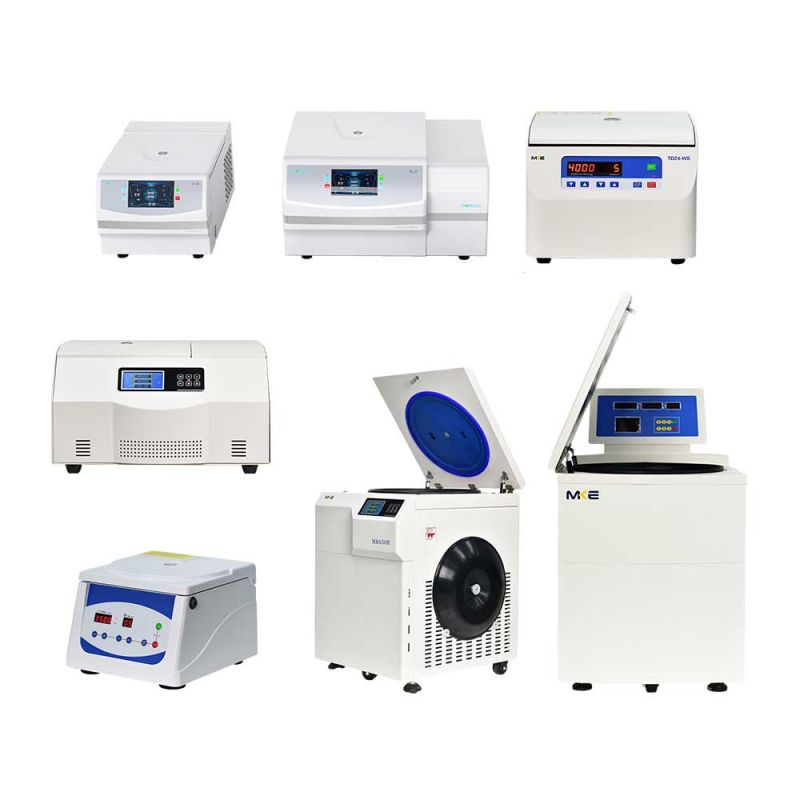
Key Considerations:
Refrigeration: Blood samples are temperature-sensitive, so a refrigerated centrifuge is often required to maintain the integrity of the sample, especially during prolonged spins.
Rotor Type: Blood separation typically uses swing-out rotors for even and efficient separation.
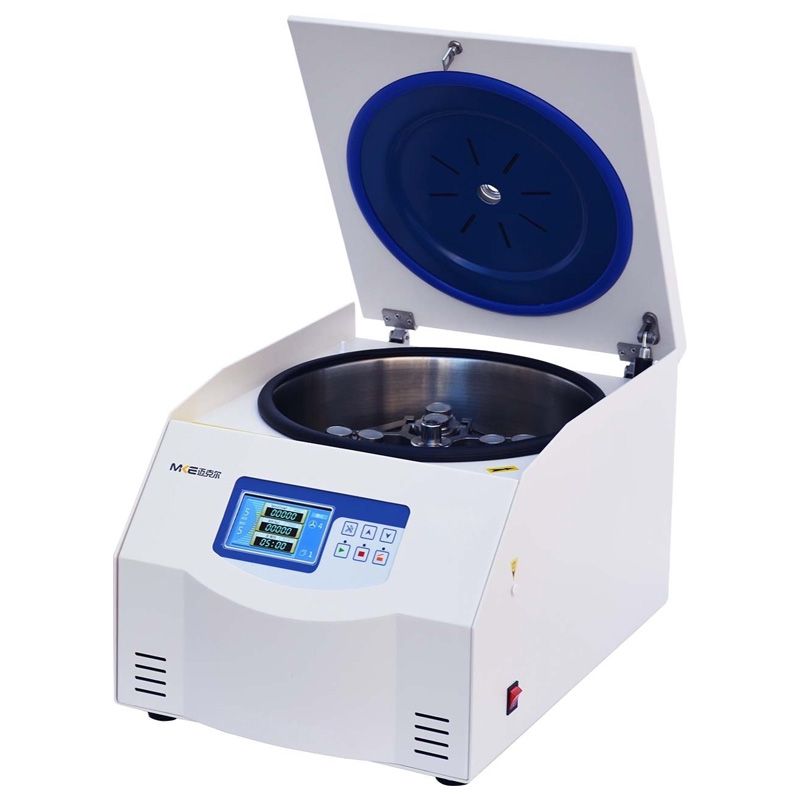
For general laboratory use, the MKE Lab KC-500B or similar models with a speed range between 3,000 to 5,000 RPM would be a reliable choice for blood processing tasks. If you have specific needs, such as PRP or buffy coat isolation, you might need a model with adjustable speeds within the mentioned ranges. Welcome to send us a inquiry, and we will choose the best centrifuge model for you.
 Return